Why Flexible Spouted Pouches Are Gaining Momentum Across the Supply Chain

Across today’s supply chain, packaging is playing an increasingly strategic role. Rising material and transportation costs, sustainability initiatives, labor constraints and evolving consumer expectations are prompting organizations to take a fresh look at how packaging can contribute to long-term business success.
As companies look for ways to improve efficiency without compromising product protection, shelf appeal or performance, flexible spouted pouches are emerging as a compelling alternative to traditional rigid packaging.
Flexible spouted pouches are helping companies rethink what packaging can achieve, transforming packaging from a necessary cost into a strategic advantage. Their ability to reduce material consumption, improve logistics efficiency, lower shipping costs, enhance user convenience and support sustainability initiatives is driving adoption across a growing range of applications and industries.
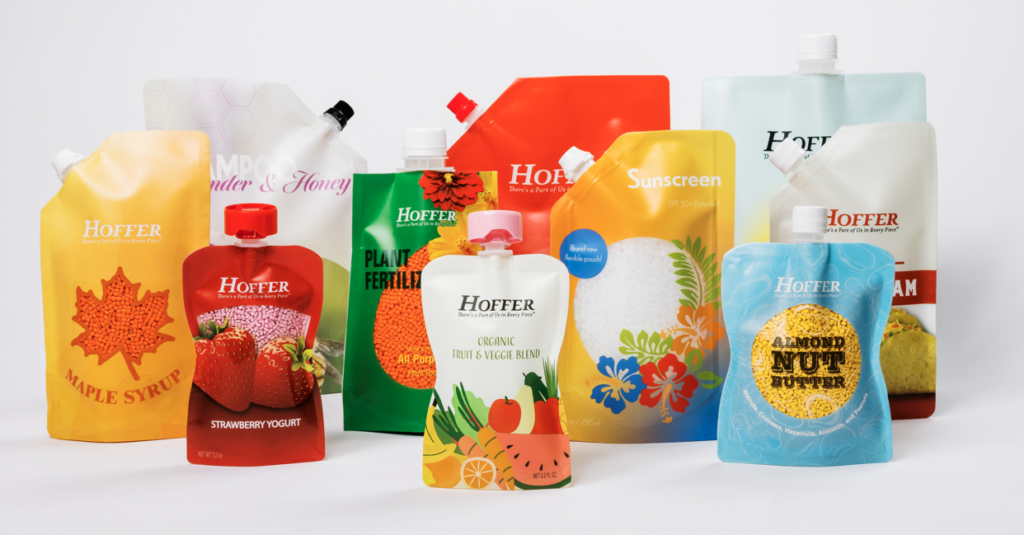
Spouted pouches bridge the gap between rigid and flexible packaging by pairing the flexibility and efficiency of pouch packaging with the convenience, product protection and dispensing functionality traditionally associated with rigid containers.
As organizations evaluate how to capitalize on these benefits, the right closure partner becomes increasingly important. Hoffer Plastics works with brands, co-manufacturers, converters and OEMs to develop innovative cap and closure solutions that help maximize the performance, functionality, sustainability and user experience of flexible spouted pouch systems.
The Business Case For Transitioning From Rigid To Flexible Packaging
For many brands, the decision to move from rigid packaging to flexible spouted pouches is not driven by a desire to change packaging formats. It’s driven by a recognition that the long-term operational, financial and sustainability benefits can justify the investment required to make the transition.
While converting from rigid packaging may require new equipment, process adjustments and operational planning, a growing number of organizations are finding that the potential return extends far beyond the packaging line itself. Today, several market forces are accelerating interest in flexible packaging and creating a compelling business case for adoption.

Cost Reduction and Operational Efficiency
Rising material, transportation and warehousing costs are prompting many companies to reevaluate their packaging strategies. Flexible spouted pouches can help reduce packaging material usage, lower freight costs and decrease packaging inventory requirements, creating measurable savings across the supply chain.
Depending on the existing product packaging, converting from rigid to flexible pouches can reduce packaging material usage by as much as 60%. Transportation efficiencies can be equally significant. For example, one lubricant manufacturer reduced transportation requirements from 26 truckloads to a single truckload after transitioning from rigid bottles to flexible spouted pouch packaging. The result was a significant reduction in freight expenses.


Sustainability Goals and Environmental Impact
As organizations pursue sustainability initiatives and environmental commitments, packaging decisions are receiving greater scrutiny. Compared to rigid packaging, spouted pouch formats have a smaller footprint that reduces material usage, lowers package weights and contributes to significant reductions in transportation-related carbon emissions.
Freight and Supply Chain Optimization
Supply chain leaders are increasingly focused on improving logistics efficiency and controlling costs.
Compared to rigid packaging, flexible pouches occupy substantially less space during transportation and storage, helping companies maximize transportation and warehouse capacity, reduce packaging inventory requirements and move more product using fewer resources. These efficiencies generate meaningful cost savings while improving overall supply chain performance.
Evolving Consumer Preferences
Consumer expectations continue to influence packaging decisions across industries, and brands now have more visibility into those preferences than ever before. Companies can quickly identify what customers value – and what frustrates them – about existing packaging formats.
Today’s consumers increasingly prioritize convenience, functionality and sustainability. Packaging that is easy to carry, store, open and dispense can have a meaningful impact on the overall product experience. At the same time, growing awareness of packaging waste has increased demand for solutions that use fewer materials and support broader sustainability goals.
Flexible spouted pouches help brands respond to these evolving expectations while maintaining product integrity and shelf appeal.

Looking ahead
The companies gaining the greatest advantage from flexible packaging are those that recognize packaging as a strategic business decision and act accordingly. They’re evaluating opportunities today to create long-term value.
As costs rise, sustainability goals become increasingly important and consumer expectations continue to evolve, organizations that assess alternative packaging formats today will be better positioned to make informed decisions, build stronger business cases and capitalize on future opportunities.
The growing momentum behind flexible spouted pouches reflects a broader evolution in how packaging is evaluated. Once viewed primarily as a means of containing and protecting products, packaging is increasingly being measured by its contribution to business performance, sustainability objectives and customer experience. Organizations that embrace this broader perspective will be better equipped to adapt as market demands continue to evolve.
Considering a transition to flexible spouted pouch packaging? Connect with Hoffer Plastics to explore cap and closure solutions that maximize the performance and value of your flexible spouted pouch system.