
From Standard to Specialized: A Smarter Approach to Cap and Spout Customization
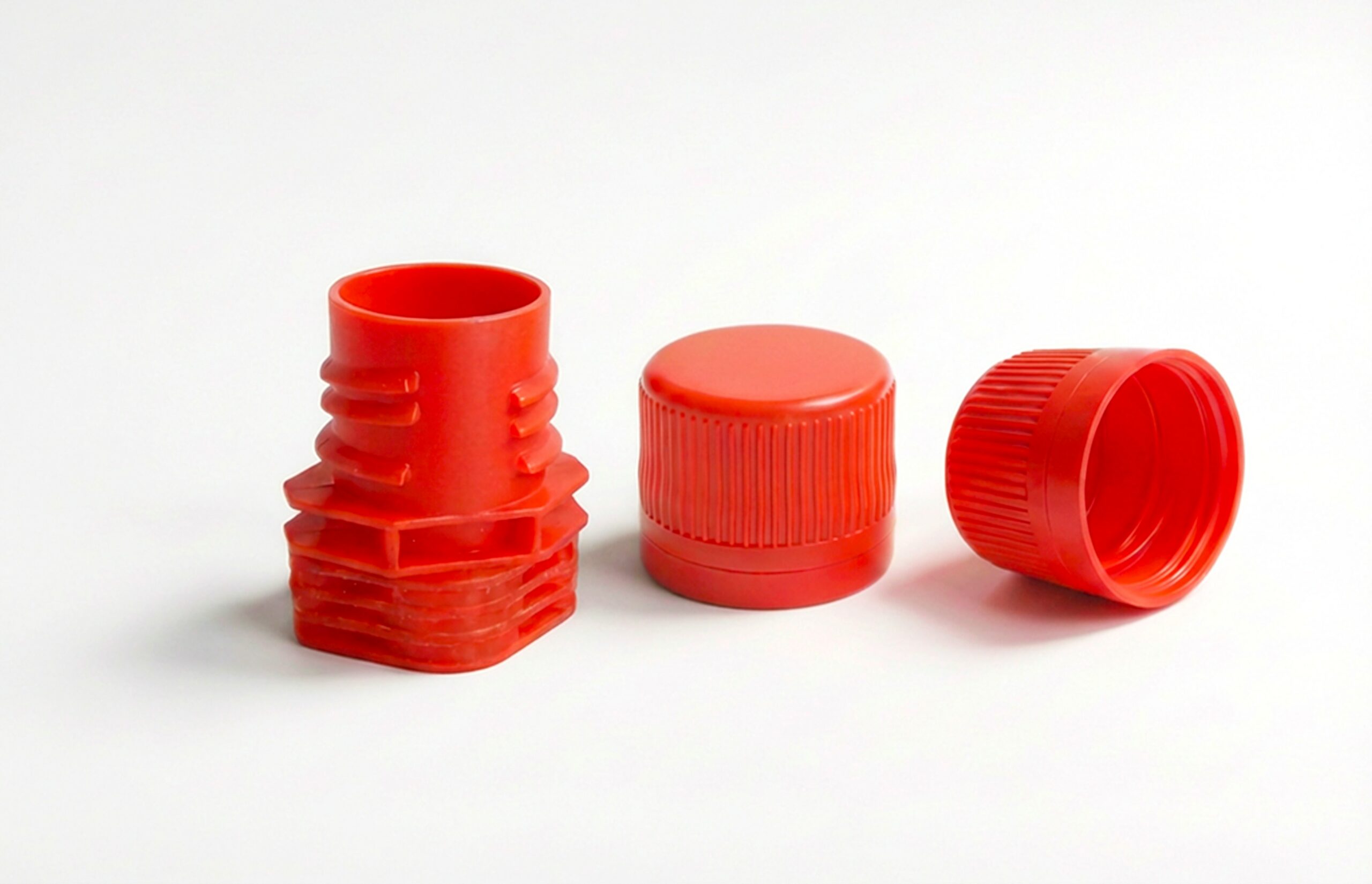
Businesses don’t need to start from scratch to create a uniquely customized cap or spout. When a company has a new product requirement or performance challenge, or it can’t find the right cap to reflect its brand, organizations often assume that an entirely new packaging solution needs to be designed. But fully custom development is just one option.
With its established Lok® family of caps and spouts for flexible and rigid packaging, Hoffer Plastics offers another approach. By leveraging existing product designs, tooling and manufacturing processes, Hoffer helps businesses customize proven solutions rather than develop entirely new caps or spouts. This flexible approach to customization allows brands to bring tailored solutions to market with less cost and complexity.
A More Flexible Approach to Customization
Flexible customization adapts Hoffer’s proven Lok® cap and spout designs, tooling and manufacturing processes to meet customer-specific needs efficiently.
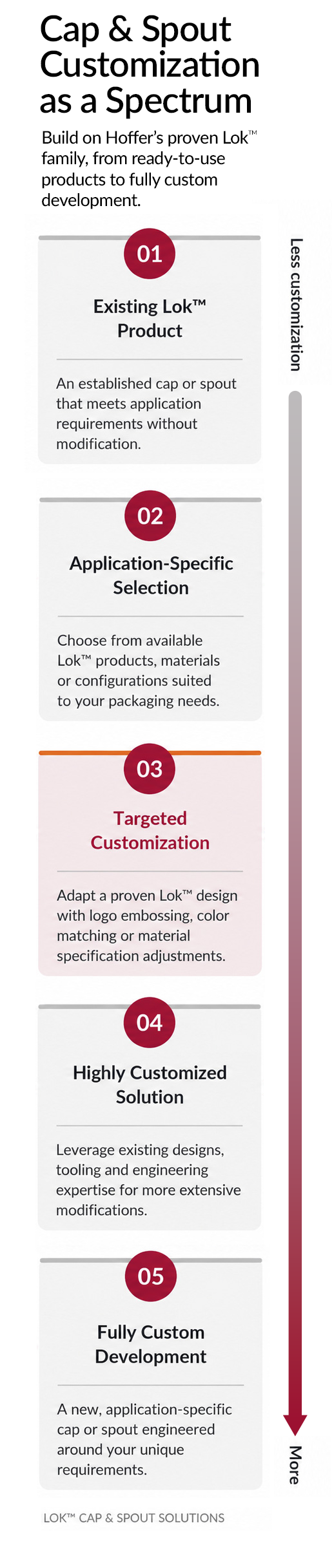
Our engineering team starts by evaluating a component’s unique application and use case. Then, we look at tooling, materials and manufacturing processes to determine the best starting point. Depending on the application, customization may involve simple modifications, such as adding an embossed logo or matching a unique brand color, or more extensive engineering to meet specific requirements.
Several capabilities make this approach possible:
- Proven Lok® Product Designs and Tooling: Trust-T-Lok®, Drop-Lok® and Tether-Lok® provide a foundation for customization without requiring entirely new component designs.
- Flexible Mold Inserts: Custom inserts accommodate features such as embossed logos without the need to develop entirely new molds.
- On-Site Engineering Expertise: Hoffer’s engineering team provides guidance on color matching, material specifications and application-specific requirements to develop tailored solutions.
- Advanced Manufacturing Capabilities: Established injection molding and secondary manufacturing processes provide the flexibility to accommodate a wide range of cap and spout designs.
By building on existing designs, customers can potentially shorten development timelines, reduce upfront tooling investments and avoid the time and expense of creating entirely new components. Starting with proven designs also reduces uncertainty during development, allowing customers to move more efficiently from concept to production while meeting their specific packaging requirements.
When Customization Makes Sense
More customization doesn’t always translate into a better end product. Brands should focus on features that improve performance, solve a specific challenge or create meaningful differentiation. Customers and manufacturing partners should work together to identify where customization will deliver the greatest value. To guide these conversations, consider four key questions:
- What does the cap and/or spout absolutely need to accomplish? Start by identifying the essential functions, performance expectations and requirements the component must meet.
- Which requirements are unique to this application? Determine whether factors such as size, material selection, functionality or operating conditions call for a customized approach.
- Which features create value for the end user? Prioritize design elements that enhance usability, improve product performance or differentiate the finished product in the marketplace. For example, Hoffer’s Lok® family offers superior tamper-evidence that protect product integrity and give consumers confidence, providing a proven foundation for further customization.
- Can an existing cap or spout satisfy some of those requirements? Explore whether proven stock solutions can meet some or all of your product’s needs, potentially reducing development time, complexity and cost.
By answering these questions early in the development process, teams can make more informed decisions about where to invest in customization.
Start with What’s Possible, Not What’s New
Successful product development begins with defining what a product needs to accomplish. Before assuming a new component must be created from scratch, consider which stock products, design elements or manufacturing capabilities could help meet those requirements. The right approach may be an existing solution, a targeted modification or fully custom development. Exploring those possibilities with an experienced manufacturing partner helps companies direct their resources toward the features that deliver meaningful value, with opportunities to reduce development time, upfront costs and unnecessary complexity.