
Quality performance remains exceptional despite aging tooling, with a scorecard of 4 PPM
April 2, 2026
Preventative Tooling Maintenance Designed to Protect Customers
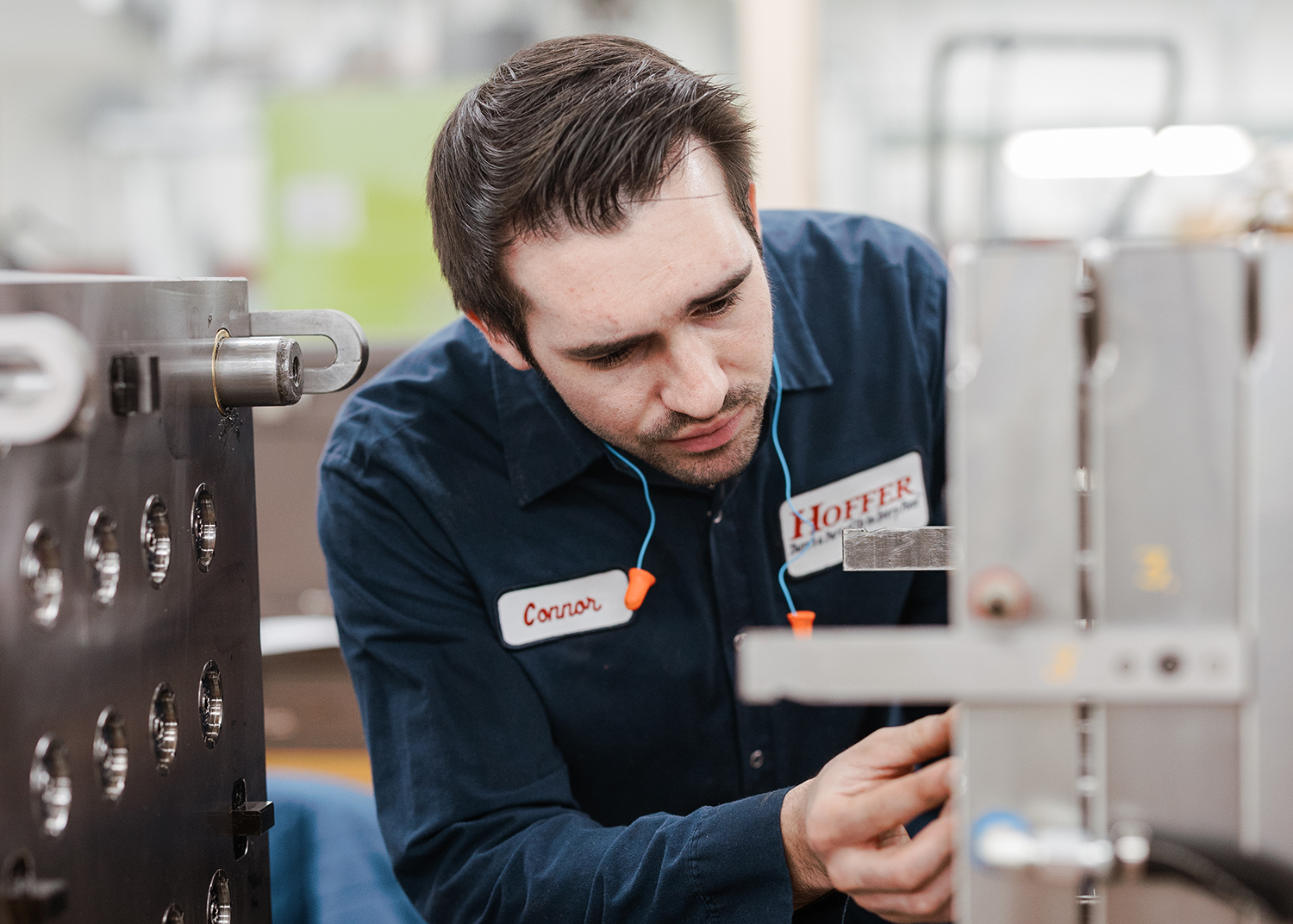
The difference between a mold that runs one million cycles and ten million cycles isn’t luck, it’s discipline. That rigor often shows up in how a company approaches tooling maintenance. When maintenance is treated as a cost center, it easily becomes reactive repair, leading to unplanned downtime, increased waste and unnecessary strain on resources. A proactive, preventative mold maintenance strategy instead focuses on risk reduction and lasting quality.
A proactive preventative mold maintenance program provides direct control over execution, timing and quality – protecting tooling performance while lowering total cost of ownership (TCO). By addressing wear and potential failures before they impact, tools run longer, more consistently and with fewer interruptions.
Preventative tooling maintenance is not just routine upkeep. It is a disciplined system designed to mitigate risk, protect and extend tooling performance and prevent failures long before they impact production. This process includes full mold disassembly, cleaning and inspection; evaluation of alignment, damage, fatigue and wear patterns that signal future failure; early replacement of high-wear components; and controlled reassembly with final inspection before tools return tools to the press.
At Hoffer Plastics, mold maintenance is treated as a strategic investment.
Tools are removed from production at defined intervals, replacing emergency repair with predictable performance, stable output and planned maintenance. This disciplined approach keeps tooling in spec across millions of cycles, reduces disruptions to production schedules and maximizes return on tooling investments.
A System That Prevents Unplanned Downtime
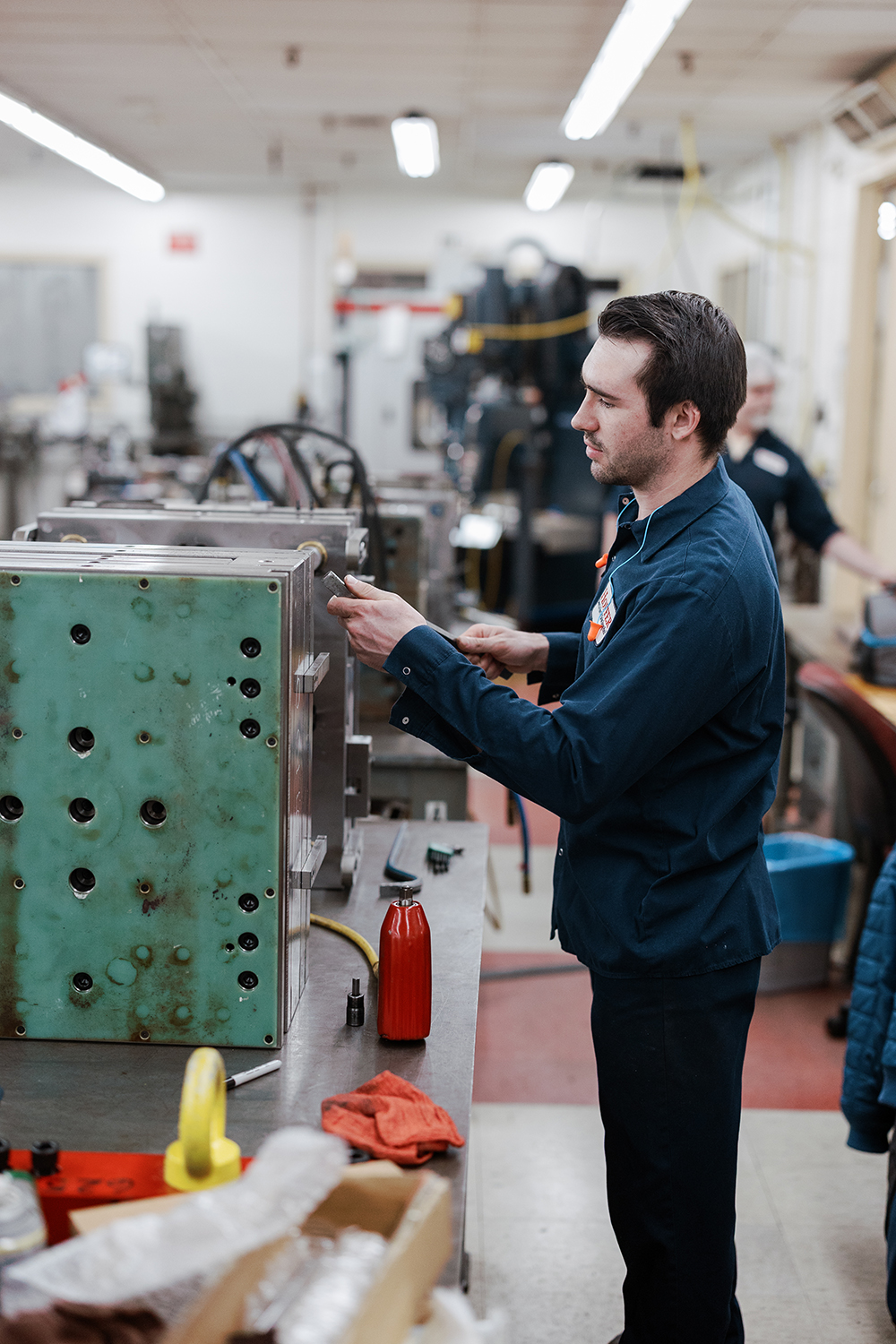
The difference between planned maintenance and emergency repair is a system that removes guesswork. That’s why we schedule tool maintenance by production hours rather than cycle counts, providing a clearer signal of actual mold exposure and wear. This ensures tools are removed from production before performance drift impacts part quality or production schedules.
Our preventative maintenance system is built around a structured, repeatable process designed to surface risk early and return tools to production with confidence:
- Complete mold teardown to expose critical interfaces and hidden wear.
- Structured cleaning and inspection to identify damage, fatigue and emerging wear patterns.
- Defined cavitation regain to restore molds to full intended cavitation and output.
- Controlled reassembly practices that protect tooling without introducing part contamination.
- Final inspection and release verification to confirm readiness before returning tools to the press.
Where Discipline Drives Performance
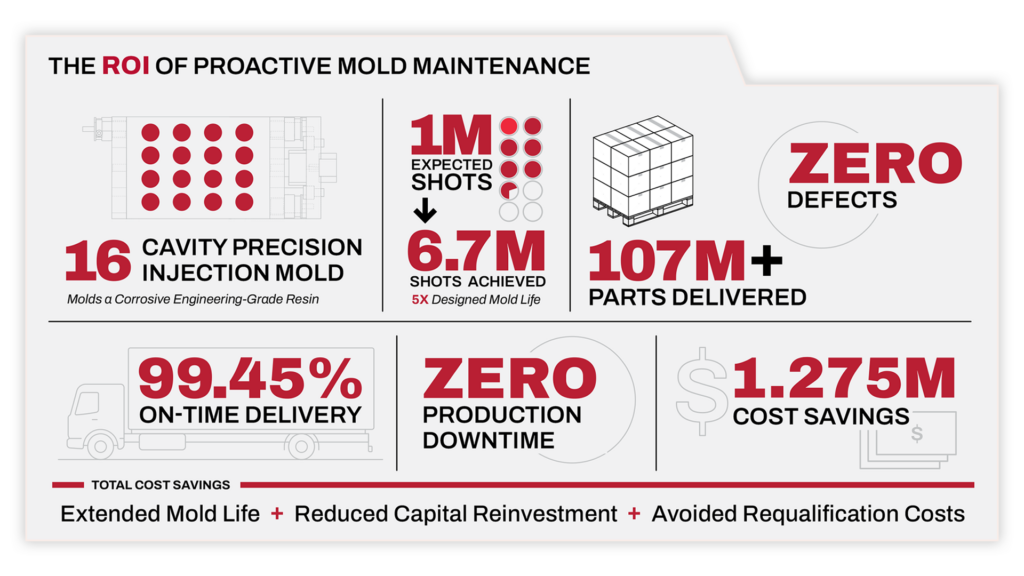
These results illustrate how Hoffer’s disciplined maintenance approach keeps tooling in spec, delivering predictable performance and minimizing production disruptions.
Supporting this process is an ERP system that tracks run time and automatically triggers work orders when molds reach their defined thresholds. Early alerts allow maintenance to be planned, not rushed, so teams can stage parts, schedule labor and coordinate press time. As tools age and wear patterns change, maintenance intervals are adjusted based on tool history and condition, supporting consistent, in-spec parts and on-time deliver with fewer production interruptions.
Addressing Findings Without Creating Risk
Preventative tooling maintenance only delivers value if findings can be addressed quickly and correctly, without introducing new risk. At Hoffer, we prioritize high-wear components through a spares-first approach, maintaining an updated inventory of critical replacement components for each mold. This ensures worn parts can be replaced immediately to protect tool integrity. This reduces the likelihood that minor wear turns into damage, downtime or costly corrective repairs.
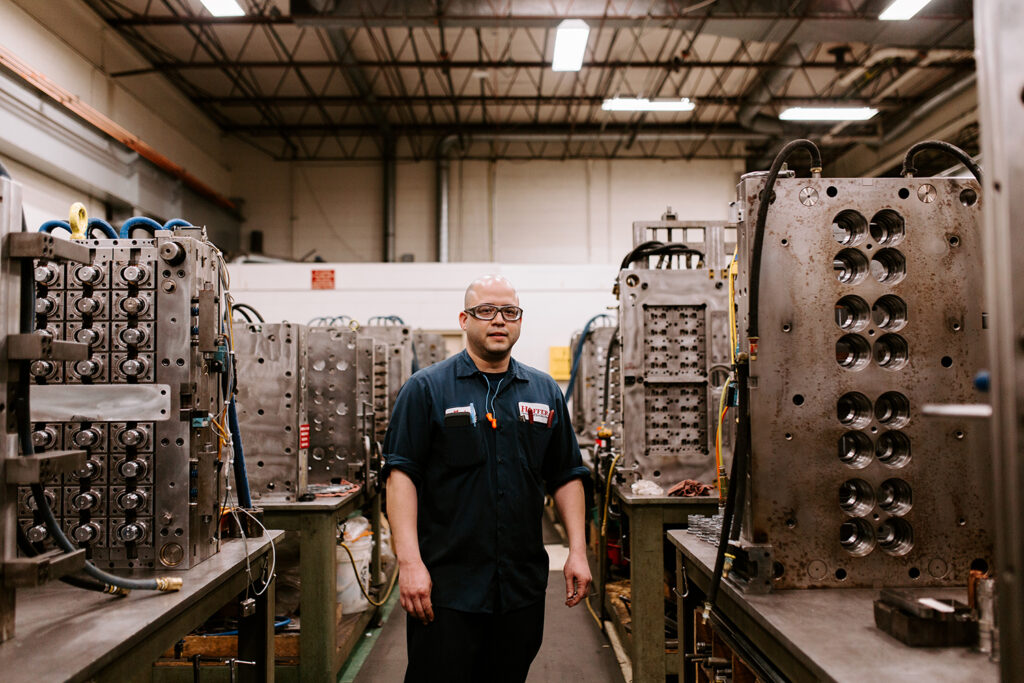
When spares are not immediately available, components are fabricated internally by one of Hoffer’s 27 moldmakers or sourced through trusted partners to keep maintenance moving and avoid extended wear. Our in-house capabilities like EDM, CNC machining and laser welding minimize risk and reduce time out of production, while maintaining exceptional control over quality and execution.
For some repairs, customer approval is required to proceed. In those instances, we move quickly and transparently to inform stakeholders, control costs and manage timelines with minimized impact.
How Hoffer Extends Tooling Life While Maximizing Performance
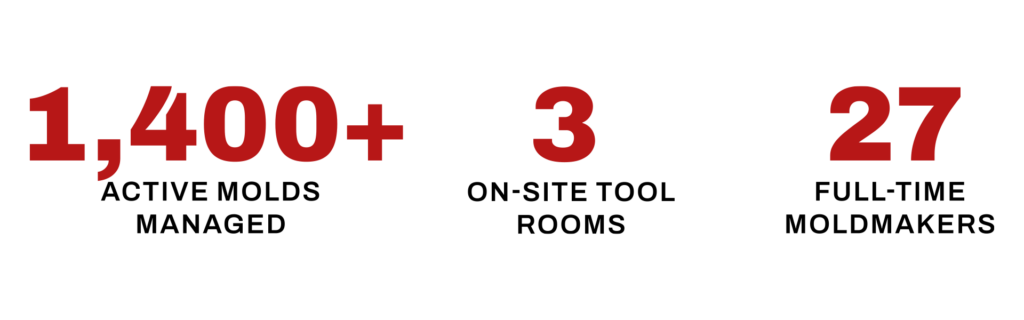
In-house tooling management is a key part of how Hoffer protects mold performance and extends mold life. Preventative maintenance is performed within our three on-site toolrooms by 27 experienced moldmakers, giving us direct control over quality, timing and consistency. Their familiarity with each mold enables quick identification of issues during inspection and service.
In-house tooling management is a key part of how Hoffer protects mold performance and extends mold life. Preventative maintenance is performed within our three on-site toolrooms by 27 experienced moldmakers, giving us direct control over quality, timing and consistency. Their familiarity with each mold enables quick identification of issues during inspection and service.
Case in Point
183 tools have exceeded their designed service life
Performance on the plant floor – from setup and processing conditions to handling – remains equally critical. This disciplined partnership ensures molds are both maintained and operated correctly, maximizing performance and extending tool life by millions of additional cycles.
Preventive Mold Maintenance as a Customer Commitment
At Hoffer, preventative tooling maintenance is more than an internal process. It is a disciplined commitment to protecting customers and maximizing the value of long-term tooling investments. By addressing wear early and executing maintenance in-house with rigor, we reduce risk and deliver predictable, in-spec performance over millions of cycles. The result is tooling that performs at a high level for decades and partnerships built on trust, reliability and consistent execution, cycle after cycle.